
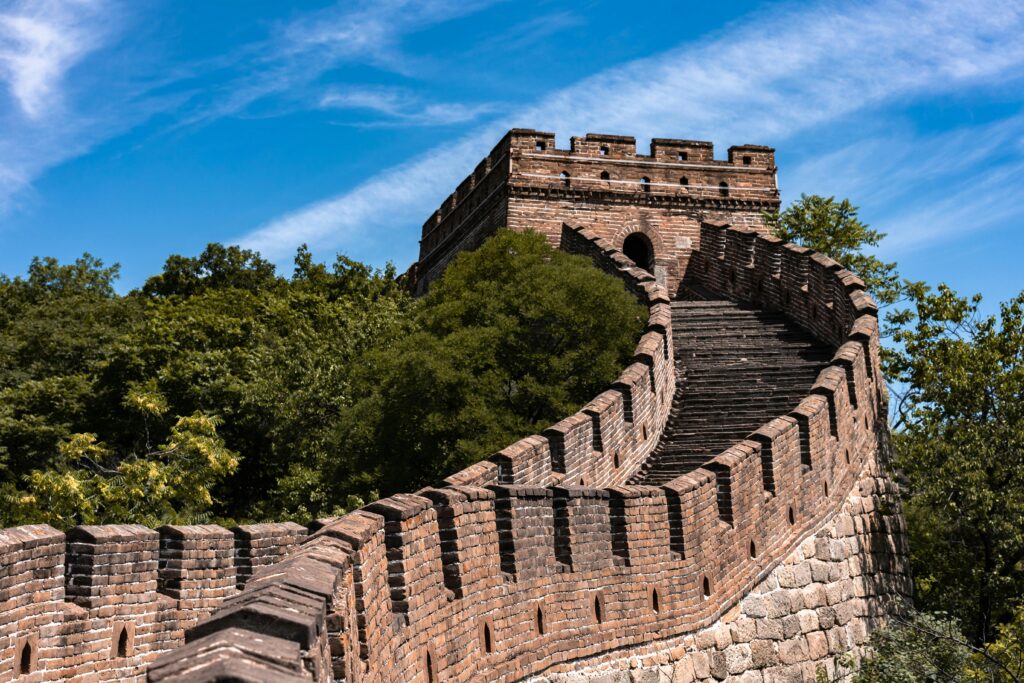
TheGreat_Wall_of_China Great Wall of China was built mainly to protect ancient China from invasions by northern tribes. For centuries, Chinese rulers faced attacks from nomadic groups like the Xiongnu, who lived beyond the northern borders. The wall acted as a strong defensive barrier to keep these invaders out.
Another important reason was to control trade and movement. The wall helped monitor important routes like the Silk Road, allowing the government to regulate goods, collect taxes, and manage who entered or left the country.
The construction of the wall began during the rule of Qin Shi Huang, the first emperor of China, around 221 BCE. He ordered earlier walls to be connected and expanded to form a unified defense system. Later dynasties, especially the Ming Dynasty, strengthened and rebuilt the wall using bricks and stones.
Main Reasons for Building the Great Wall:
- To protect China from invasions
- To control borders and immigration
- To secure trade routes like the Silk Road
- To send signals using watchtowers (smoke and fire)
In short, the Great Wall of China was not just a wall—it was a smart military system that helped protect and manage the Chinese empire for many centuries.
Who Built the Great Wall of China and Why?
The construction of the Great Wall began during the rule of Qin Shi Huang, the first emperor of China, around 221 BCE. He ordered different walls to be connected and strengthened to defend his empire.
Later, during the Ming Dynasty, the wall was rebuilt and expanded using stronger materials like bricks and stones.
Why was it built?
- To protect against invasions from northern tribes
- To secure trade routes like the Silk Road
- To control borders and immigration
- To send warning signals using smoke and fire
Who Worked on Building the Great Wall?
Millions of people worked on the Great Wall over centuries, including:
- Soldiers
- Farmers
- Prisoners
The work was extremely hard, and many workers lost their lives during construction.
History of the Great Wall of China
The Great Wall of China has a long and fascinating history that began over 2,000 years ago. It is not a single wall but a series of walls built and rebuilt by different Chinese dynasties to protect their land.
Early History (7th Century BCE)
The earliest walls were built by small kingdoms in northern China. These walls were made of earth, wood, and stones to defend against enemy attacks. They were separate and not connected.
Qin Dynasty (221–206 BCE)
The first major construction began under Qin Shi Huang, the first emperor of China. After unifying China, he ordered the connection of existing walls to create a stronger defense system against northern tribes like the Xiongnu.
Han Dynasty (206 BCE–220 CE)
During the Han Dynasty, the wall was extended further west. This helped protect the Silk Road, an important trade route connecting China to other regions.
Ming Dynasty (1368–1644)
The most well-known and strongest sections of the wall were built during the Ming Dynasty. The Ming rulers used bricks and stones instead of mud, making the wall more durable. They also added watchtowers, forts, and signal systems.
Present Day Importance
Today, the Great Wall of China is one of the most famous landmarks in the world. It is a symbol of China’s strength, culture, and history. Millions of tourists visit it every year.
Conclusion
The Great Wall of China is a great example of ancient engineering and human effort. Built over many centuries, it continues to stand as one of the greatest achievements in world history.
MORE INFORMATION https://lsbelectronic.com/contact/