
Introduction
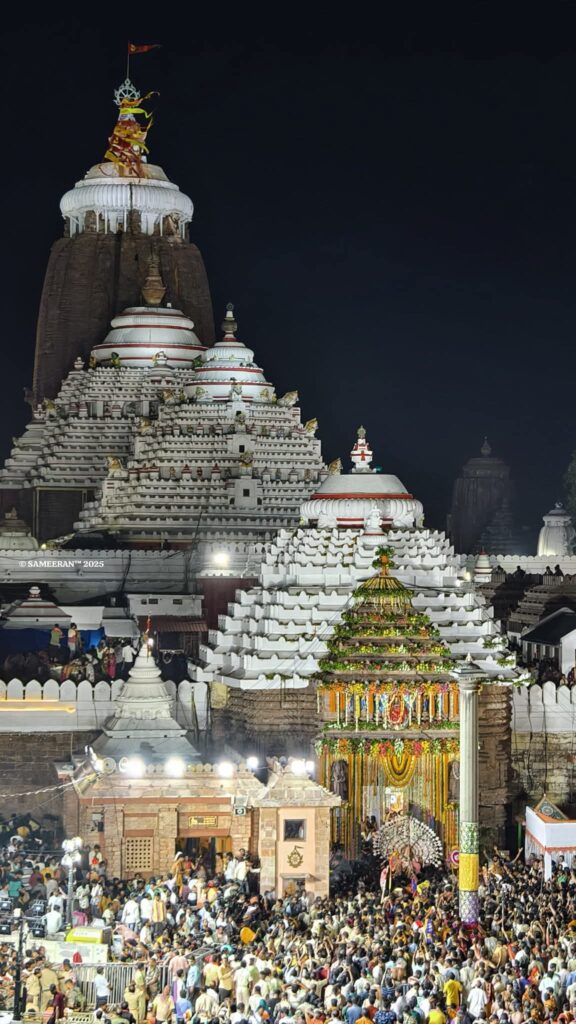
The Jagannath Temple in Puri, Odisha, is one of India’s most revered Hindu temples and a major destination for pilgrims from across the world. Dedicated to Lord Jagannath, an incarnation of Lord Vishnu, the temple forms an important part of the sacred Char Dham Yatra, alongside Badrinath, Dwarka, and Rameswaram.
Known for its remarkable Kalinga-style architecture, ancient traditions, and the world-famous Rath Yatra festival, the temple represents centuries of devotion and cultural heritage. Every year, millions of devotees visit Jagannath Temple to seek blessings, participate in religious ceremonies, and experience the spiritual atmosphere of Puri.
Whether you are interested in the Jagannath Temple history, planning a pilgrimage, learning about the Jagannath Rath Yatra story, or searching for accommodation at Nilachal Bhakta Niwas, this comprehensive guide provides all the essential information in one place.
Jagannath Temple History
The Jagannath Temple history is closely linked to the Eastern Ganga Dynasty. Historians believe that the present temple was commissioned by King Anantavarman Chodaganga Deva during the 12th century and later completed by King Anangabhima Deva. Since then, the temple has remained one of the most significant centers of Vaishnavism in India.
According to Hindu tradition, the origin of Lord Jagannath worship is much older than the present temple. Ancient scriptures describe how King Indradyumna received divine guidance to establish a shrine for Lord Jagannath after discovering the sacred wooden form known as Daru Brahma.
Over the centuries, the temple faced several invasions and periods of political unrest. During these difficult times, the temple priests carefully protected the sacred idols by moving them to secure locations until the temple could safely resume worship. These efforts helped preserve one of India’s most important religious traditions.
Today, Jagannath Temple continues to inspire millions of devotees and stands as a symbol of faith, resilience, and spiritual unity.
Historical Highlights
- Construction began during the reign of King Anantavarman Chodaganga Deva.
- The temple was completed by King Anangabhima Deva.
- It is dedicated to Lord Jagannath, Lord Balabhadra, and Goddess Subhadra.
- Jagannath Temple is one of the four sacred Char Dham pilgrimage sites.
- The temple has remained a major center of worship for more than 800 years.
About Jagannath Temple
Learning about Jagannath Temple reveals why it occupies a special place in India’s religious and cultural history.
Situated in the coastal city of Puri, Odisha, the temple complex spreads across a vast area enclosed by high fortified walls. The sanctum houses the unique wooden idols of Lord Jagannath, Lord Balabhadra, and Goddess Subhadra, making it different from most Hindu temples, where stone idols are commonly worshipped.
One of the temple’s most distinctive traditions is the Nabakalebara ceremony. During this sacred ritual, the wooden idols are ceremonially replaced at specific intervals, usually every 12 to 19 years, following elaborate religious customs.
Another remarkable feature is the temple kitchen, which is widely regarded as one of the largest community kitchens in the world. Hundreds of traditional cooks prepare Mahaprasad every day using clay pots stacked over wood-fired stoves. The food is first offered to the deities and then distributed among thousands of devotees.
The temple complex also includes several important religious structures such as the Aruna Stambha, Mukti Mandap, Koili Baikuntha, Anand Bazaar, and many smaller shrines dedicated to various Hindu deities.
Architecture of Jagannath Temple
Jagannath Temple is an outstanding example of traditional Kalinga architecture. The towering main shrine rises approximately 65 metres above the ground and dominates the skyline of Puri.
Its architectural highlights include beautifully carved stone walls, grand entrance gates, intricate sculptures, and the famous Nilachakra, an eight-metal sacred wheel placed at the top of the temple.
One of the temple’s most fascinating traditions is the daily replacement of its sacred flag by trained temple servitors, a ritual that has continued uninterrupted for centuries.
Why Is Jagannath Temple Famous?
Jagannath Temple attracts visitors from around the world because of its:
- Spiritual importance in Hinduism
- Status as one of the Char Dham pilgrimage sites
- Annual Rath Yatra festival
- Unique wooden idols
- Historic temple kitchen and Mahaprasad
- Magnificent Kalinga architecture
- Rich cultural and religious traditions
Jagannath Rath Yatra Story
The Jagannath Rath Yatra story is one of the most celebrated traditions in Hinduism.
Every year, Lord Jagannath, accompanied by Lord Balabhadra and Goddess Subhadra, leaves the main temple to visit the Gundicha Temple. According to tradition, this journey symbolizes the Lord’s visit to His aunt’s home and reflects His desire to bless all devotees outside the temple.
Three massive wooden chariots are specially built each year for the festival.
Nandighosha
The chariot of Lord Jagannath has 16 wheels and is decorated with vibrant yellow and red cloth.
Taladhwaja
Lord Balabhadra’s chariot has 14 wheels and is distinguished by its green and red decorations.
Darpadalana
The chariot of Goddess Subhadra has 12 wheels and is decorated in black and red.
The construction of these chariots begins several months before the festival using specially selected wood and traditional craftsmanship passed down through generations.
During Rath Yatra, millions of devotees gather in Puri to pull the giant chariots with thick ropes. Participating in this sacred ritual is believed to bring divine blessings and spiritual merit.
After spending several days at the Gundicha Temple, the deities return to the main temple during the Bahuda Yatra, marking the conclusion of the festival.
Religious Significance
Rath Yatra represents:
- Equality among all devotees
- Divine compassion
- Unity beyond social differences
- The Lord’s blessings for humanity
- The victory of devotion over worldly attachments
The festival is one of the world’s largest religious processions and attracts millions of pilgrims every year.
Nilachal Bhakta Niwas
Nilachal Bhakta Niwas is one of the preferred accommodation options for pilgrims visiting Jagannath Temple in Puri.
Operated by the Shree Jagannath Temple Administration (SJTA), the guest house offers clean, comfortable, and affordable lodging for individuals, families, and groups.
Facilities
- Well-maintained rooms
- Air-conditioned and non-AC accommodation
- Family rooms
- 24-hour water supply
- Parking facilities
- Security services
- Nearby transport access
- Convenient location close to Jagannath Temple
Why Choose Nilachal Bhakta Niwas?
Many pilgrims choose Nilachal Bhakta Niwas because it provides reliable accommodation at reasonable prices while remaining close to the temple. The peaceful atmosphere and convenient facilities make it an ideal choice for devotees.
During major festivals such as Rath Yatra, booking accommodation well in advance is strongly recommended because rooms fill quickly.
Jagannath Temple Timings
The temple follows a daily schedule of rituals beginning before sunrise and continuing until late at night. Daily activities include Mangala Aarti, multiple Bhoga offerings, public darshan, evening rituals, and the final Badasinghara Besha ceremony.
Visitors should check the official temple schedule before planning their visit, as timings may change during festivals and special occasions.
Best Time to Visit Jagannath Temple
The most comfortable time to visit Jagannath Temple is between October and March, when the weather in Puri is cool and pleasant.
Travelers wishing to witness the famous Rath Yatra should plan their visit during June or July, depending on the Hindu calendar. Since this period attracts enormous crowds, early travel and accommodation bookings are highly advisable.
How to Reach Jagannath Temple
By Air
The nearest airport is Biju Patnaik International Airport in Bhubaneswar, approximately 60 kilometres from Puri.
By Train
Puri Railway Station is connected to major cities across India through regular train services.
By Road
Puri is easily accessible by road from Bhubaneswar, Cuttack, Kolkata, Visakhapatnam, and several other cities.
Temple Entry Guidelines
Before visiting Jagannath Temple, devotees should remember to:
- Wear modest and respectful clothing.
- Follow all temple customs and regulations.
- Maintain silence within the temple premises.
- Avoid photography inside restricted areas.
- Respect instructions given by temple authorities.
Nearby Places to Visit
A trip to Jagannath Temple can be combined with visits to several nearby attractions, including:
- Puri Beach
- Gundicha Temple
- Narendra Tank
- Konark Sun Temple
- Chilika Lake
- Lokanath Temple
- Raghurajpur Heritage Village
Interesting Facts About Jagannath Temple
- Jagannath Temple is over 800 years old.
- The temple’s sacred flag is changed every day through a traditional ritual.
- The Nilachakra appears visible from every direction around the temple.
- Mahaprasad is prepared daily for thousands of devotees.
- The wooden idols are ceremonially replaced during the Nabakalebara festival.
- Jagannath Temple is one of the most important pilgrimage sites in Hinduism.
Frequently Asked Questions
Who built Jagannath Temple?
The present temple was commissioned by King Anantavarman Chodaganga Deva and later completed by King Anangabhima Deva.
Why is Jagannath Temple famous?
It is renowned for its spiritual importance, unique wooden deities, magnificent architecture, Mahaprasad tradition, and the internationally celebrated Rath Yatra.
What is the significance of Rath Yatra?
The festival commemorates Lord Jagannath’s annual journey to Gundicha Temple and symbolizes equality, devotion, and divine compassion.
Is Nilachal Bhakta Niwas suitable for families?
Yes. It provides clean, affordable, and convenient accommodation for families and pilgrims visiting Puri.
When is the best time to visit Jagannath Temple?
October to March offers the most pleasant weather, while June or July is ideal for experiencing the Rath Yatra.
Conclusion
The Jagannath Temple is much more than a place of worship. It is a timeless symbol of India’s spiritual traditions, architectural excellence, and cultural heritage. From the fascinating Jagannath Temple history to the inspiring Jagannath Rath Yatra story, every aspect of this sacred shrine reflects centuries of faith and devotion. Visitors can make their pilgrimage more comfortable by choosing Nilachal Bhakta Niwas for accommodation. Whether you seek spiritual fulfillment, historical knowledge, or cultural exploration, Jagannath Temple offers an unforgettable experience that continues to inspire millions of people from around the world.