

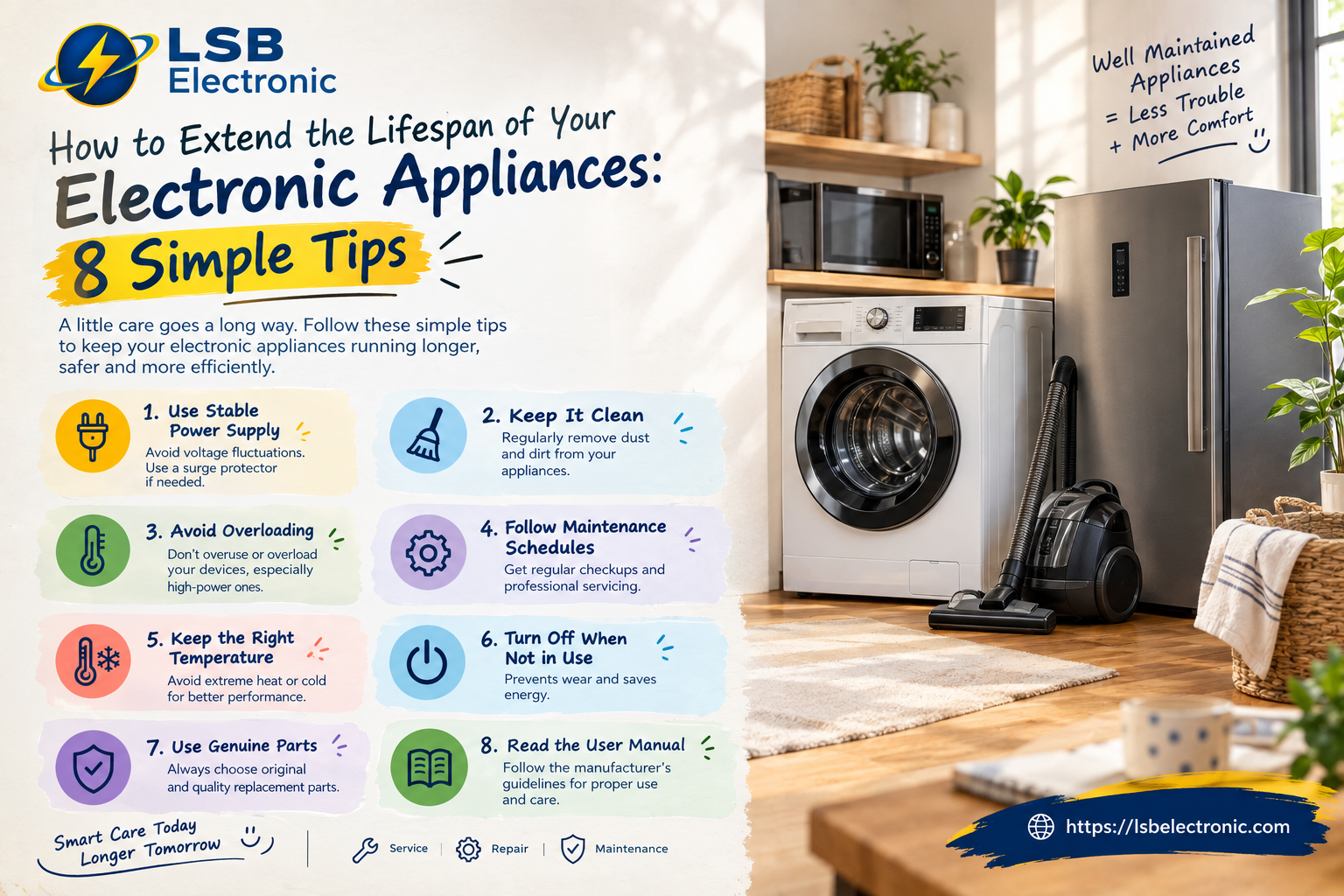
We rely on our electronic appliances every single day—from the refrigerator keeping our food fresh to the washing machine handling our laundry. Yet most of us only think about electronics repair tips once something has already stopped working. The truth is, a little regular care goes a long way. With the right home appliance repair habits and some basic electronic gadget maintenance, you can add years to the life of your devices and save a good amount of money along the way.
Here’s a practical, no-nonsense guide to keeping your appliances running longer.
1. Keep Them Clean, Always
Dust and dirt are silent killers of electronics. They clog vents, block airflow, and cause internal parts to overheat. Something as simple as wiping down your appliances weekly and cleaning the filters, coils, or vents every month can prevent a lot of damage before it starts. This is one of the easiest DIY electronics repair habits anyone can pick up — no tools or technical knowledge required.
2. Don’t Ignore the Warning Signs
Every appliance gives you hints before it fails completely — a strange noise, a burning smell, flickering lights, or slower performance. Learning basic electronics troubleshooting means paying attention to these small changes instead of waiting for a full breakdown. Catching a problem early is almost always cheaper and easier to fix than waiting until it turns into a bigger issue.
3. Avoid Overloading and Overuse
Running your appliances beyond their intended capacity is one of the fastest ways to shorten their lifespan. Overloading a washing machine, running an AC non-stop in extreme heat, or plugging too many devices into one socket puts unnecessary strain on internal components. Using appliances the way they’re meant to be used is a simple, often overlooked way to protect your investment.
4. Invest in Surge Protection
Power fluctuations and sudden surges can silently damage the internal circuitry of your devices, even if the appliance still “works” afterward. A good quality surge protector is a small, one-time cost that can save you from a much bigger repair bill down the line — especially important for expensive electronics.
5. Know the Common Mistakes to Avoid
There are a few common mistakes to avoid while repairing electronics that end up doing more harm than good:
- Opening up a device without unplugging it first
- Using the wrong tools or forcing parts that don’t fit
- Ignoring the user manual and manufacturer guidelines
- Trying to fix complex electrical faults without proper knowledge
If you’re not confident about a repair, it’s better to pause and get expert help rather than risk making the problem worse.
6. DIY vs Professional Repair — What Should You Choose?
This is a question we hear all the time. When it comes to DIY vs professional electronics repair, the answer depends on the issue:
Go the DIY route for:
- Basic cleaning and dust removal
- Replacing simple parts like batteries or filters
- Resetting or restarting devices
- Minor software or settings issues
Call a professional when you notice:
- Burning smells or visible sparks
- Repeated electrical shocks or short circuits
- Unusual sounds coming from internal components
- The appliance stops working completely with no clear cause
These are the clearest signs your electronic device needs professional repair — and ignoring them can turn a small fix into a costly replacement.
7. Schedule Regular Maintenance Checks
Just like a car needs servicing, your electronic appliances benefit from a periodic professional check-up. A technician can spot early signs of wear, loose connections, or worn-out components that aren’t obvious to an untrained eye. This kind of preventive care is one of the most effective cost-saving tips for electronic appliance repair—spending a small amount now to avoid a much bigger expense later.
8. Store and Handle Devices Properly
Extreme temperatures, moisture, and rough handling all reduce the lifespan of electronics. Keep appliances in dry, ventilated spaces, away from direct sunlight or damp areas, and always follow proper handling instructions—especially during transport or storage.
Final Thoughts
Extending the life of your electronic appliances isn’t about doing anything complicated—it’s about being consistent with small habits: cleaning regularly, watching for warning signs, avoiding overload, and knowing when to call in an expert instead of risking a DIY fix gone wrong.
If your appliance is already showing signs of trouble, don’t wait for it to get worse. A quick professional inspection today can save you a much bigger repair bill tomorrow